Tumble mustard
Discuss this plant with the guide — choose this profile as a possible match and prepare your observations for Colorado Plants & Practical Care.
Sisymbrium altissimum
Introduced weed · not on state Lists A/B/C. C-floristic-2020 CO-rules-2025
Another tumbleweed: brittle plants scatter persistent seed. Exposure help.
Identification caveat: Tumbleweed describes a dispersal habit, not one species. This mustard is distinct from Russian thistle, kochia and the perennial baby’s-breath species.
Still researching this plant
This is a sourced working profile. Evidence is incomplete for People, Dogs & cats, Other animals. Identification and source-photo limits are explained below. Independent botanical and veterinary review is pending. Uncertainty is not a finding that the plant is safe.
Three views of this plant
Source-identified reference photographs; these are not a complete identification key. A source location outside Colorado does not establish local occurrence.
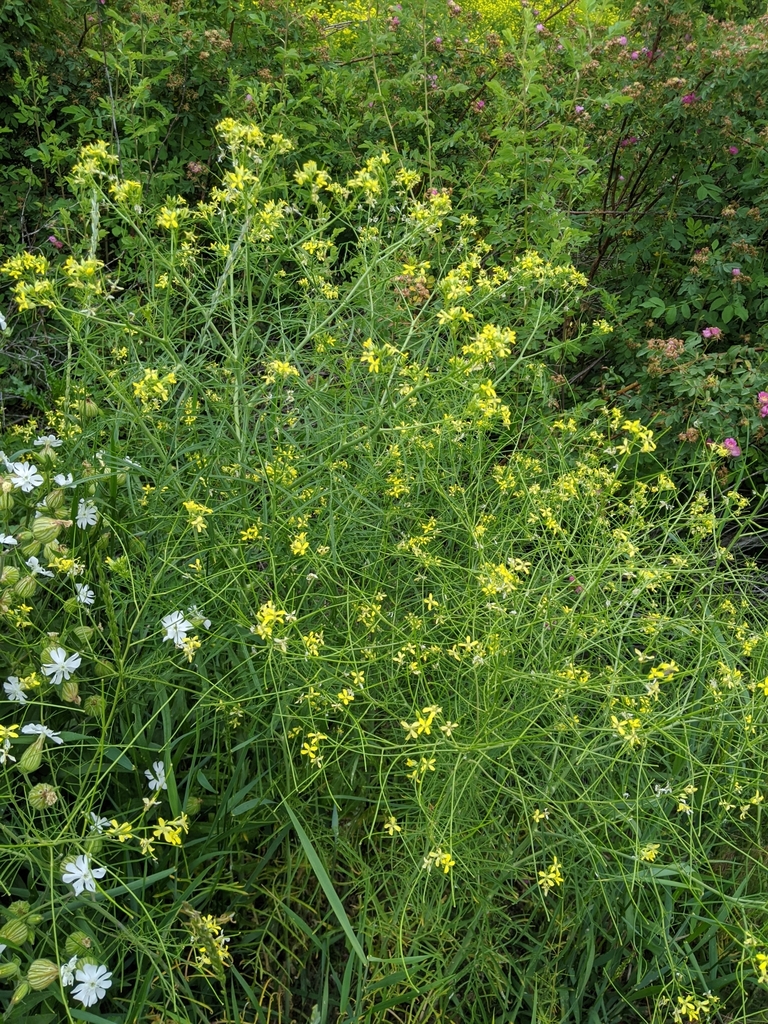
Ben Keen · CC0 1.0
Photo source and identification
Original record · Original image
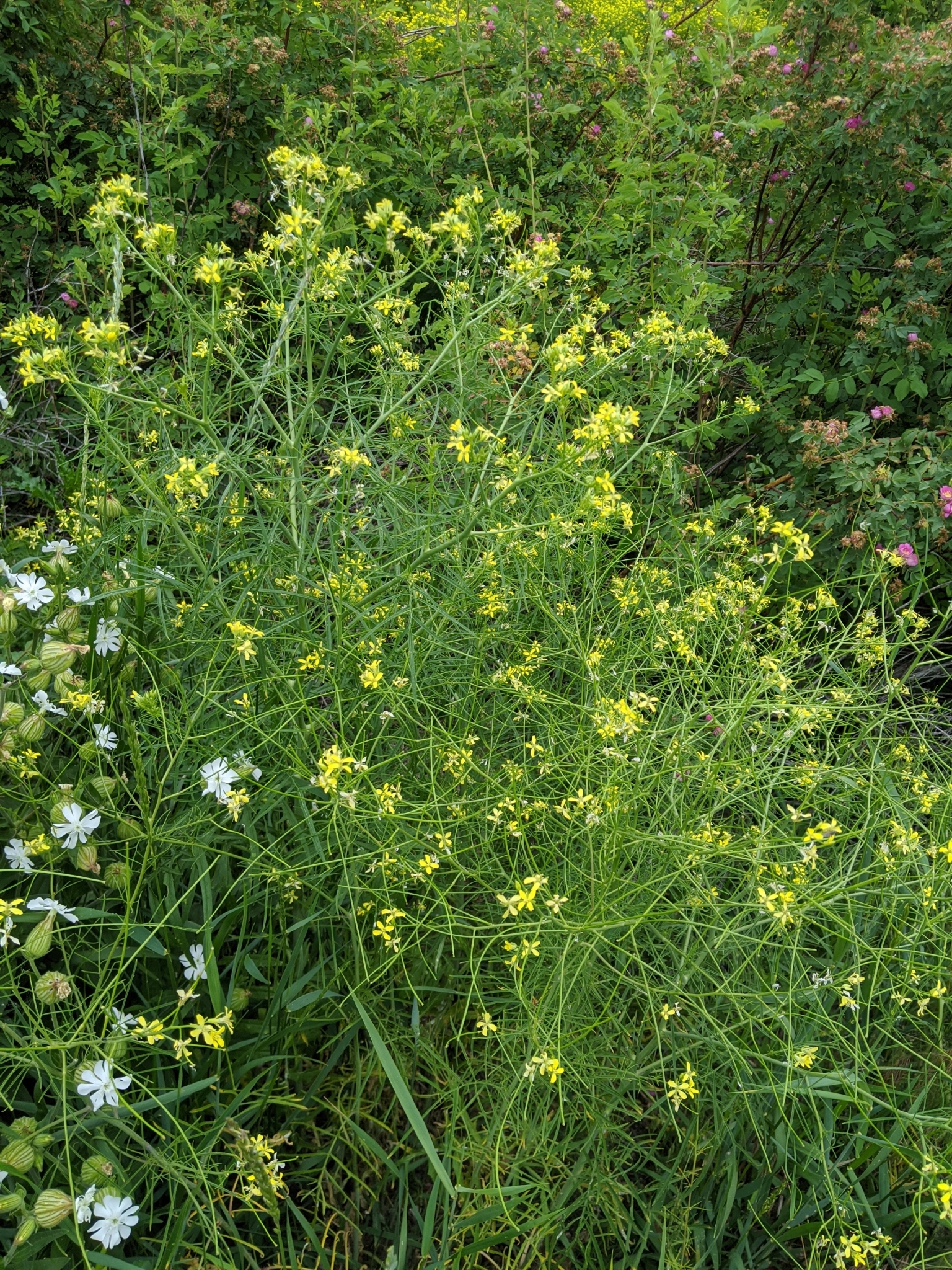
Explicit iNaturalist observation taxon and Research Grade community identification; photograph visually reviewed for depicted features. This is source identification, not a new independent botanical determination. Source identifies this plant to species; no variety or subspecies determination is asserted.
Downloaded iNaturalist large rendition; downloaded bytes retained unchanged. No local crop, retouching, or generative editing. Gallery display preserves the full image; catalog preview may use a CSS crop.
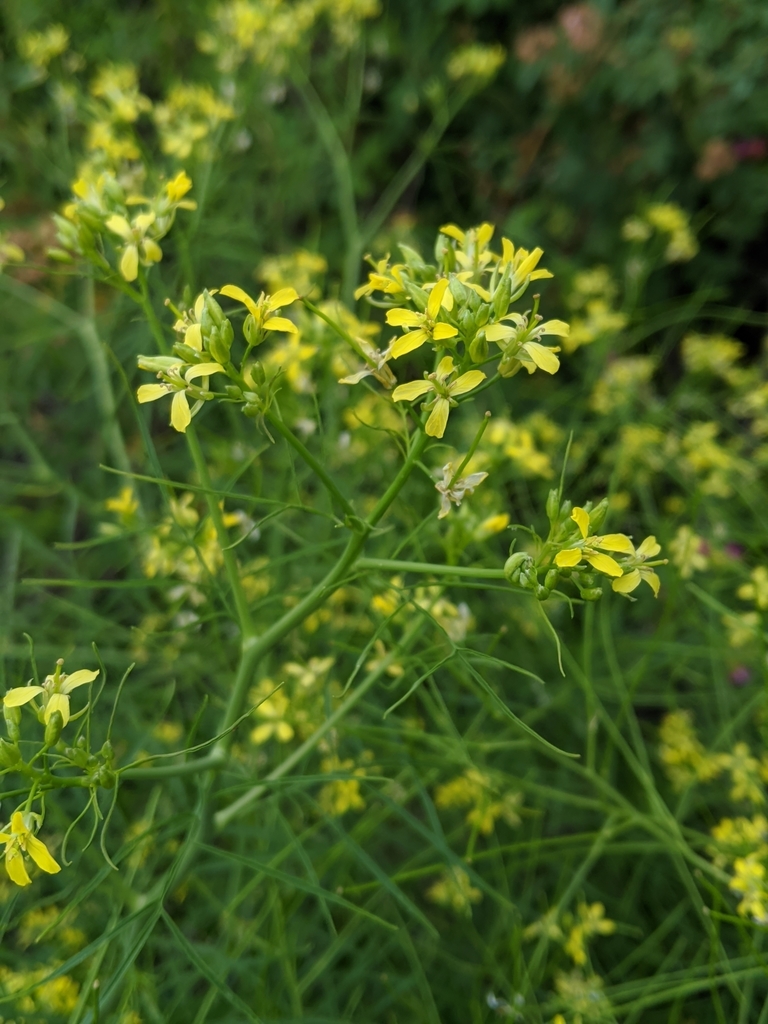
Ben Keen · CC0 1.0
Photo source and identification
Original record · Original image
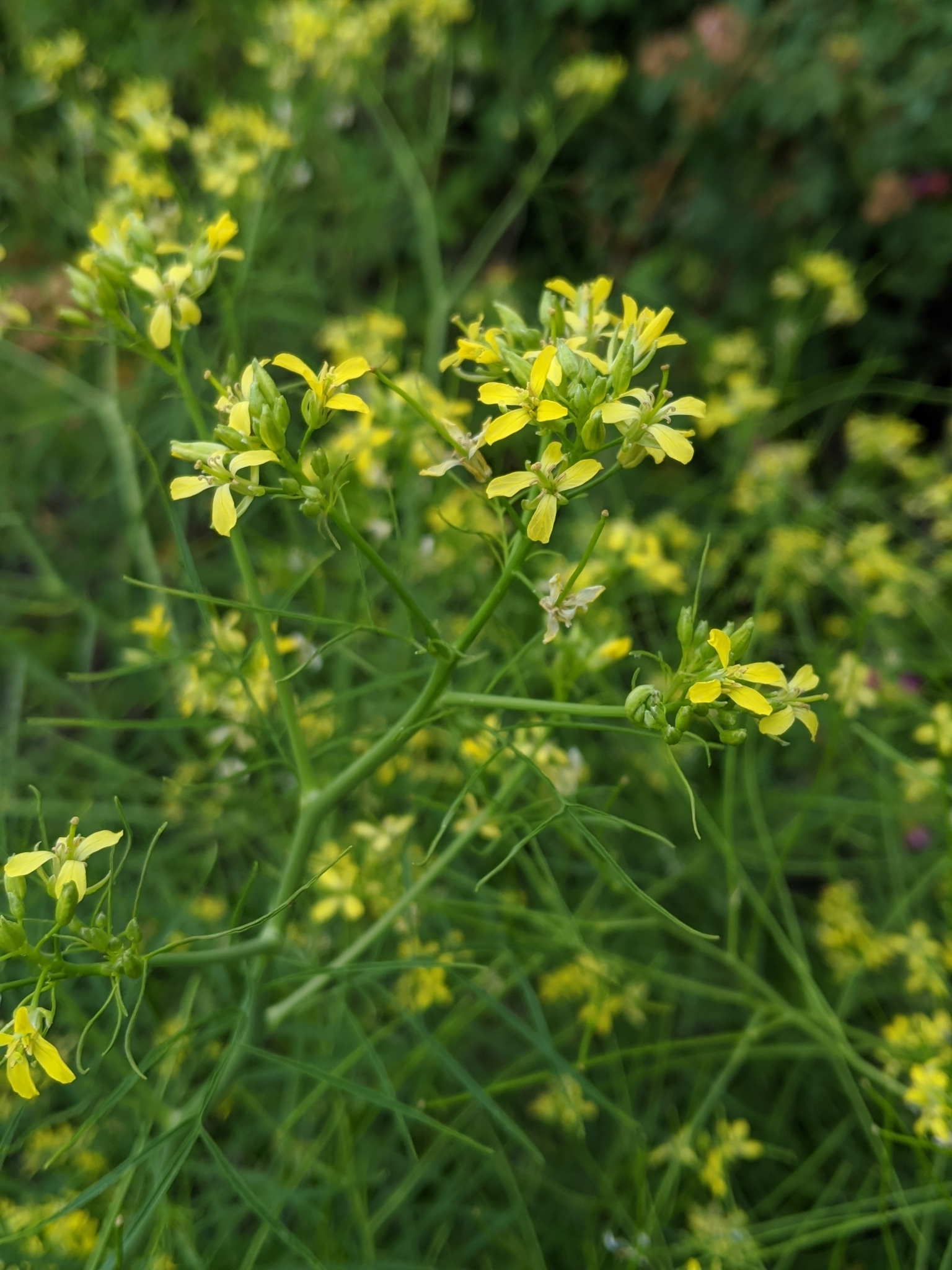
Explicit iNaturalist observation taxon and Research Grade community identification; photograph visually reviewed for depicted features. This is source identification, not a new independent botanical determination. Source identifies this plant to species; no variety or subspecies determination is asserted.
Downloaded iNaturalist large rendition; downloaded bytes retained unchanged. No local crop, retouching, or generative editing. Gallery display preserves the full image; catalog preview may use a CSS crop.
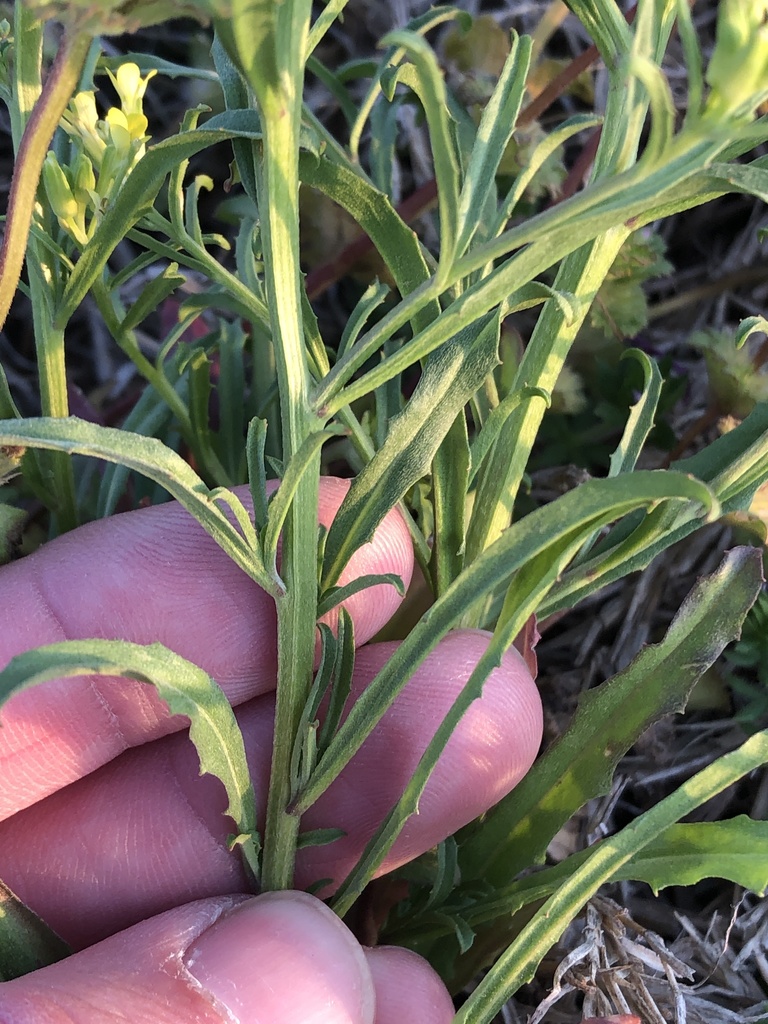
Sam Kieschnick · CC BY 4.0
Photo source and identification
Original record · Original image
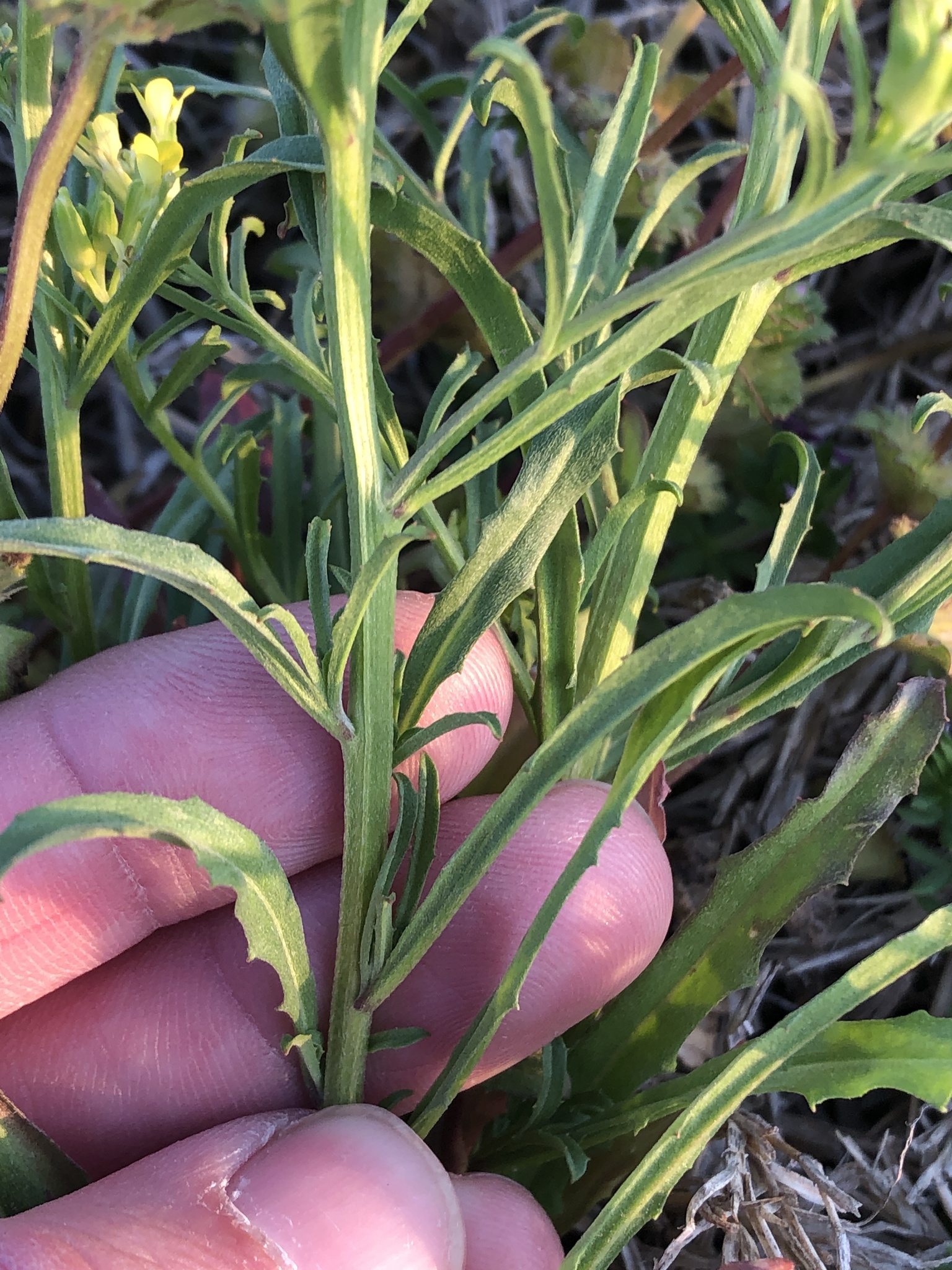
Explicit iNaturalist observation taxon and Research Grade community identification; photograph visually reviewed for depicted features. This is source identification, not a new independent botanical determination. Source identifies this plant to species; no variety or subspecies determination is asserted.
Downloaded iNaturalist large rendition; downloaded bytes retained unchanged. No local crop, retouching, or generative editing. Gallery display preserves the full image; catalog preview may use a CSS crop.
Identification
An introduced annual or biennial with a rounded, finely branching mature form and long narrow seedpods. Leaves become smaller toward the top. F-sisymbrium
People
The reviewed sources do not establish species-specific ingestion effects or a safe exposure amount for people. Missing evidence does not establish safety.
Dogs & cats
The reviewed sources do not establish species-specific ingestion effects or a safe exposure amount for dogs or cats. Missing evidence does not establish safety.
Other animals
Livestock and wildlife consume some young growth. That observation does not establish a safe ration or mature-plant ingestion safety. F-sisymbrium
Plants & habitat
The dry stem can break at its base and move with the wind, releasing seed gradually. It colonizes disturbed ground and can be transported by machinery. F-sisymbrium
Management & timing
Prevent seed maturation, reduce unnecessary soil disturbance and maintain desired vegetation. Check equipment and field edges for transported plants. F-sisymbrium
Before taking action
Confirm identification and the requirements of your county weed program. For chemical treatment, follow the current product label, including restrictions around animals and water. S27
References
- C-floristic-2020 — Colorado Floristic Quality Assessment: 2020 Update, Colorado Natural Heritage Program, Colorado State University. Accessed 2026-09-07T02:27:33+00:00. Locator: Appendix B, Colorado species list: scientific name and native/non-native fields.
- CO-rules-2025 — Colorado Noxious Weed Act rules, 8 CCR 1206-2, Colorado Secretary of State / Department of Agriculture. Accessed 2026-09-07T01:07:48+00:00. Locator: Parts 3.1, 4.1, 5.1; management provisions; effective May 15, 2025.
- F-sisymbrium — Tall tumblemustard, USDA Forest Service, Fire Effects Information System. Accessed 2026-09-07T02:24:49+00:00. Locator: Taxonomy, distribution, botanical description, wildlife/livestock values and management.
- S27 — 2103 – Colorado Noxious Weeds, PlantTalk Colorado · CSU Extension. Accessed 2026-09-07T00:23:57+00:00. Locator: List A, B and C management categories.