Prostrate knotweed
Discuss this plant with the guide — choose this profile as a possible match and prepare your observations for Colorado Plants & Practical Care.
Polygonum aviculare
Common introduced weed · not on state Lists A/B/C. C-floristic-2020 CO-rules-2025
A mat-forming weed of compacted ground. Exposure help.
Identification caveat: This small lawn weed is not Japanese knotweed or another large invasive Reynoutria species. Polygonum aviculare is treated broadly here. The flower photo is source-labeled Polygonum aviculare subsp. depressum (s. lat.). Segregate-taxon boundaries remain under research; no subspecies determination is made for Colorado specimens.
Still researching this plant
This is a sourced working profile. Evidence is incomplete for People, Dogs & cats, Other animals. Identification and source-photo limits are explained below. Independent botanical and veterinary review is pending. Uncertainty is not a finding that the plant is safe.
Three views of this plant
Source-identified reference photographs; these are not a complete identification key. A source location outside Colorado does not establish local occurrence.
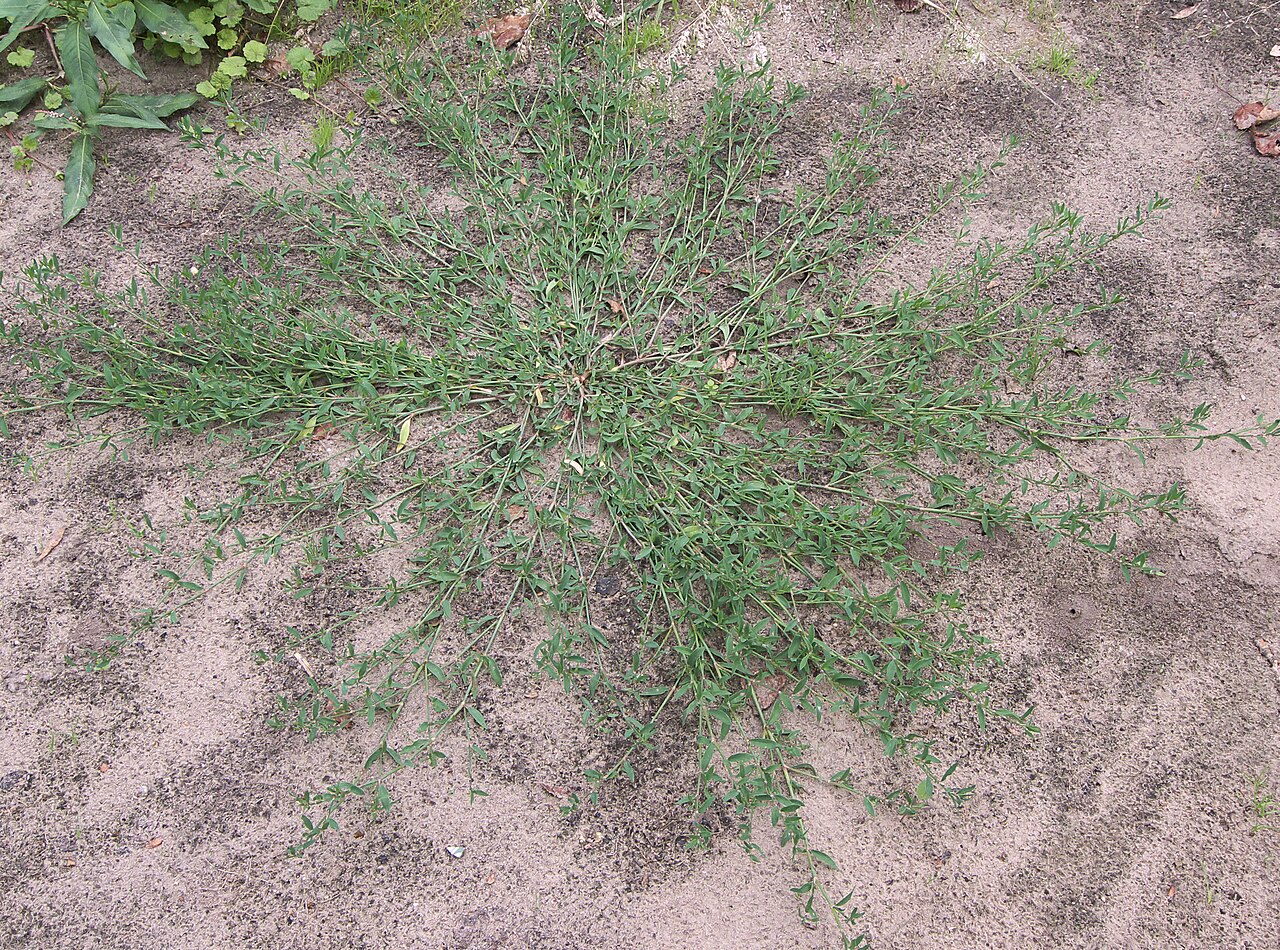
Rasbak · CC BY-SA 3.0
Photo source and identification
Original record · Original image


Source page scientific identification plus visual morphology review of the selected photograph. This is a source-identified reference image, not a specimen-based taxonomic determination. Polygonum aviculare is used as a variable species aggregate. The selected flower macro is explicitly source-labeled P. aviculare subsp. depressum (s. lat.); it is retained with that source wording. These photographs do not resolve every segregate taxon or the subspecies of an unknown Colorado specimen.
Wikimedia server-resized derivative, reduced from the original; no crop, color change, upscaling, or generative editing. Gallery display preserves the full image; catalog preview may use a CSS crop.
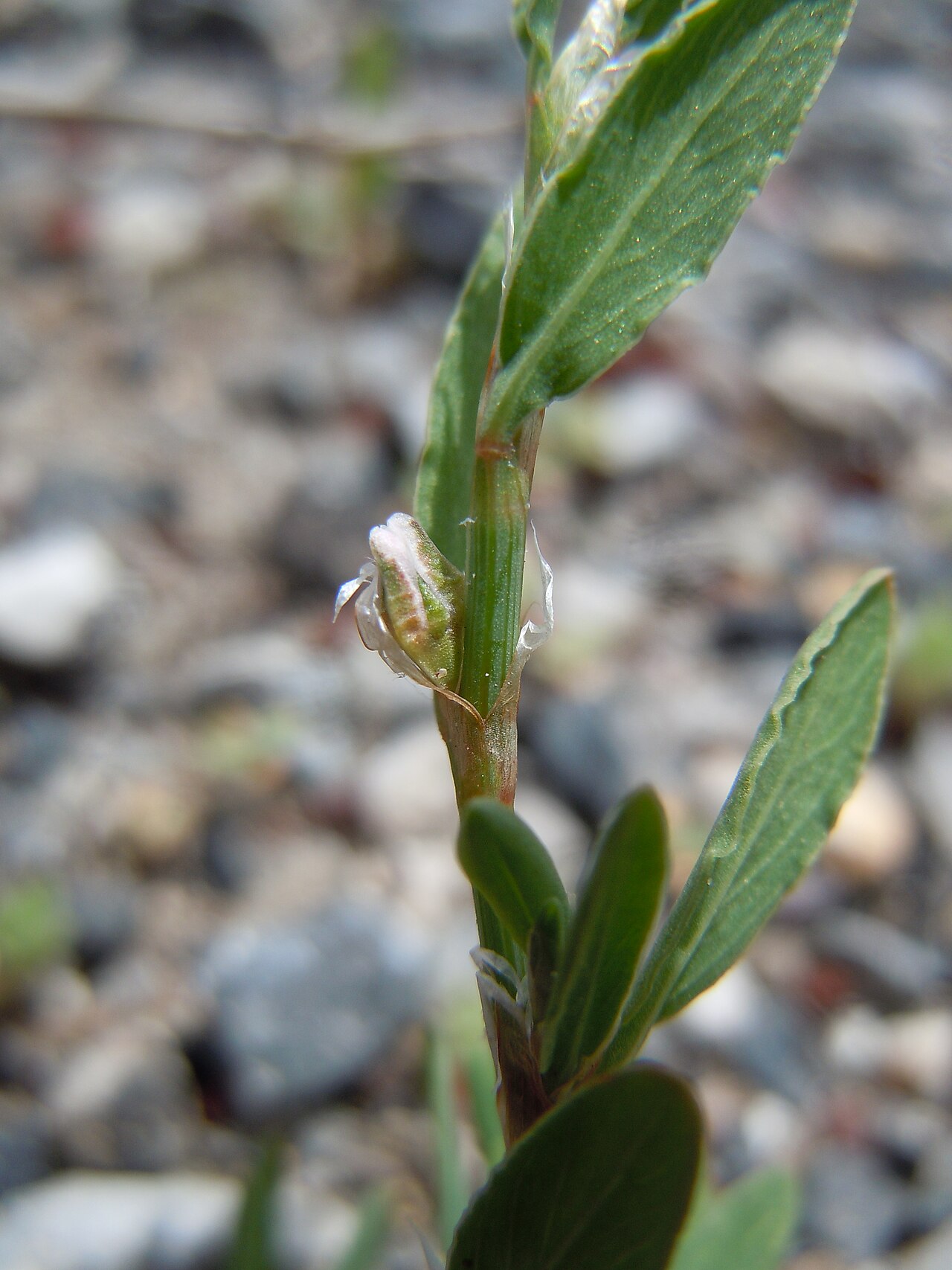
Matt Lavin · CC BY-SA 2.0
Photo source and identification
Original record · Original image
.jpg)

Source page scientific identification plus visual morphology review of the selected photograph. This is a source-identified reference image, not a specimen-based taxonomic determination. Polygonum aviculare is used as a variable species aggregate. The selected flower macro is explicitly source-labeled P. aviculare subsp. depressum (s. lat.); it is retained with that source wording. These photographs do not resolve every segregate taxon or the subspecies of an unknown Colorado specimen.
Wikimedia server-resized derivative, reduced from the original; no crop, color change, upscaling, or generative editing. Gallery display preserves the full image; catalog preview may use a CSS crop.
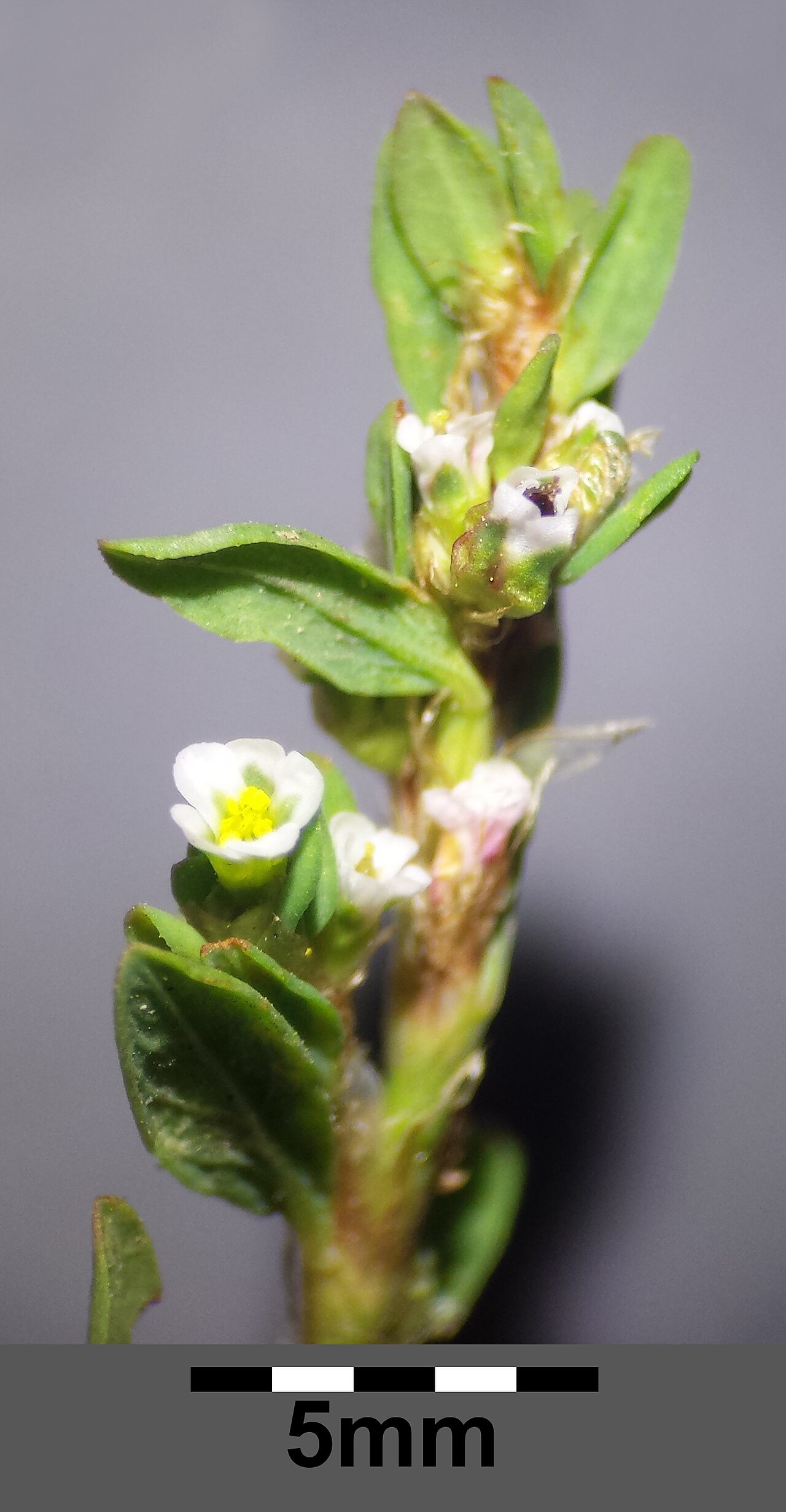
Stefan.lefnaer · CC BY-SA 4.0
Photo source and identification
Original record · Original image
_sl8.jpg)

Source page scientific identification plus visual morphology review of the selected photograph. This is a source-identified reference image, not a specimen-based taxonomic determination. Polygonum aviculare is used as a variable species aggregate. The selected flower macro is explicitly source-labeled P. aviculare subsp. depressum (s. lat.); it is retained with that source wording. These photographs do not resolve every segregate taxon or the subspecies of an unknown Colorado specimen.
Wikimedia server-resized derivative, reduced from the original; no crop, color change, upscaling, or generative editing. Gallery display preserves the full image; catalog preview may use a CSS crop.
Identification
Look for wiry, low stems, alternating small leaves and papery sheaths around the swollen joints. Tiny flowers appear where the leaves meet the stems. N-polygonum-aviculare
People
The reviewed sources do not establish species-specific ingestion effects or a safe exposure amount for people. Missing evidence does not establish safety.
Dogs & cats
The reviewed sources do not establish species-specific ingestion effects or a safe exposure amount for dogs or cats. Missing evidence does not establish safety.
Other animals
The reviewed sources do not establish species-specific ingestion effects or a safe exposure amount for livestock. Missing evidence does not establish safety.
Plants & habitat
It tolerates trampling, poor soil and pavement cracks. A persistent seed supply helps it return where desirable vegetation struggles. N-polygonum-aviculare
Management & timing
Mowing misses much of this low plant. Address compaction in affected turf and remove small plants before seed production. N-polygonum-aviculare C-descriptions
Before taking action
Confirm identification and the requirements of your county weed program. For chemical treatment, follow the current product label, including restrictions around animals and water. S27
References
- C-floristic-2020 — Colorado Floristic Quality Assessment: 2020 Update, Colorado Natural Heritage Program, Colorado State University. Accessed 2026-09-07T02:27:33+00:00. Locator: Appendix B, Colorado species list: scientific name and native/non-native fields.
- CO-rules-2025 — Colorado Noxious Weed Act rules, 8 CCR 1206-2, Colorado Secretary of State / Department of Agriculture. Accessed 2026-09-07T01:07:48+00:00. Locator: Parts 3.1, 4.1, 5.1; management provisions; effective May 15, 2025.
- N-polygonum-aviculare — Polygonum aviculare, NC State Extension. Accessed 2026-09-07T02:23:11+00:00. Locator: Description, identification attributes and plant problems; toxicity section where present.
- C-descriptions — Weed descriptions, Colorado State University Extension. Accessed 2026-09-07T00:24:02+00:00. Locator: Species entries.
- S27 — 2103 – Colorado Noxious Weeds, PlantTalk Colorado · CSU Extension. Accessed 2026-09-07T00:23:57+00:00. Locator: List A, B and C management categories.