Bittersweet nightshade
Discuss this plant with the guide — choose this profile as a possible match and prepare your observations for Colorado Plants & Practical Care.
Solanum dulcamara
Common weed; not an A/B/C listing in the reviewed state rule. CO-rules-2025
Poisonous berries and foliage. Exposure help.
Identification caveat: Not interchangeable with deadly nightshade (Atropa belladonna), edible tomatoes or other Solanum species. County occurrence remains to be mapped in this guide.
Still researching this plant
This is a sourced working profile. The cited findings are available below. Identification and source-photo limits are explained below. Independent botanical and veterinary review is pending. Uncertainty is not a finding that the plant is safe.
Three views of this plant
Source-identified reference photographs; these are not a complete identification key. A source location outside Colorado does not establish local occurrence.
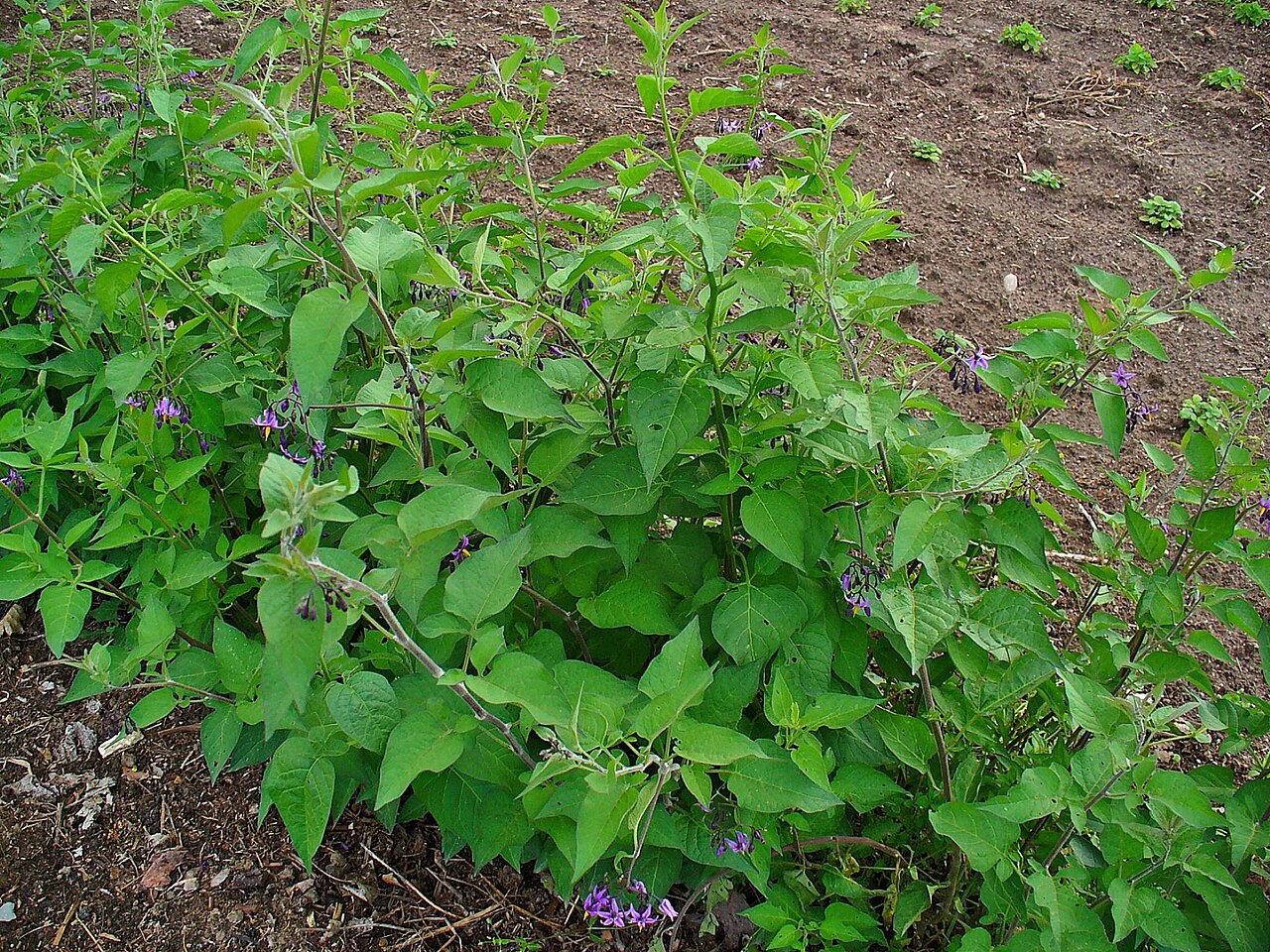
H. Zell · CC BY-SA 3.0
Photo source and identification
Original record · Original image

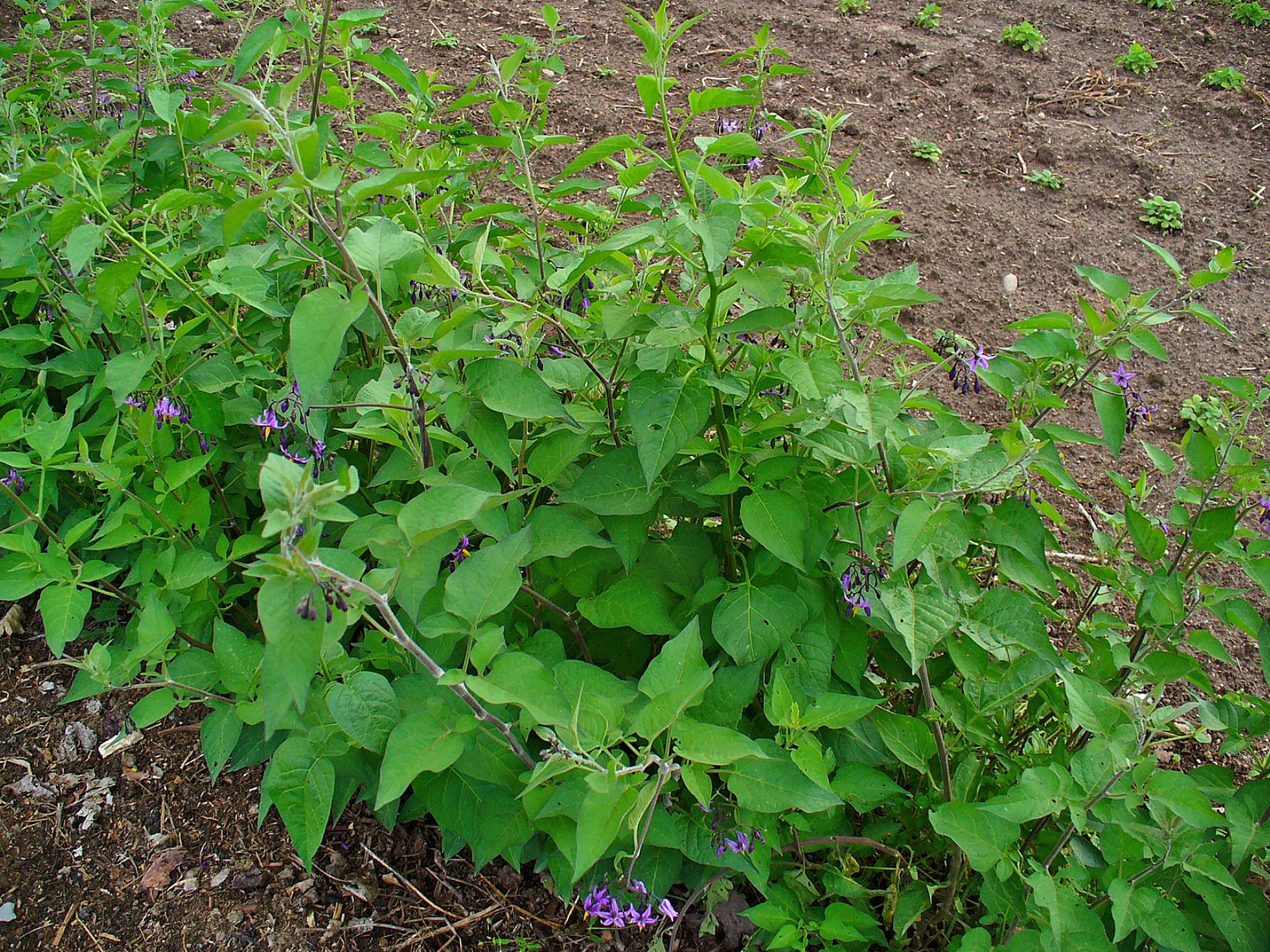
Source page scientific identification plus visual morphology review of the selected photograph. This is a source-identified reference image, not a specimen-based taxonomic determination.
Wikimedia server-resized derivative; no crop, color change, or generative editing. Gallery display preserves the full image; the catalog preview uses a CSS crop.
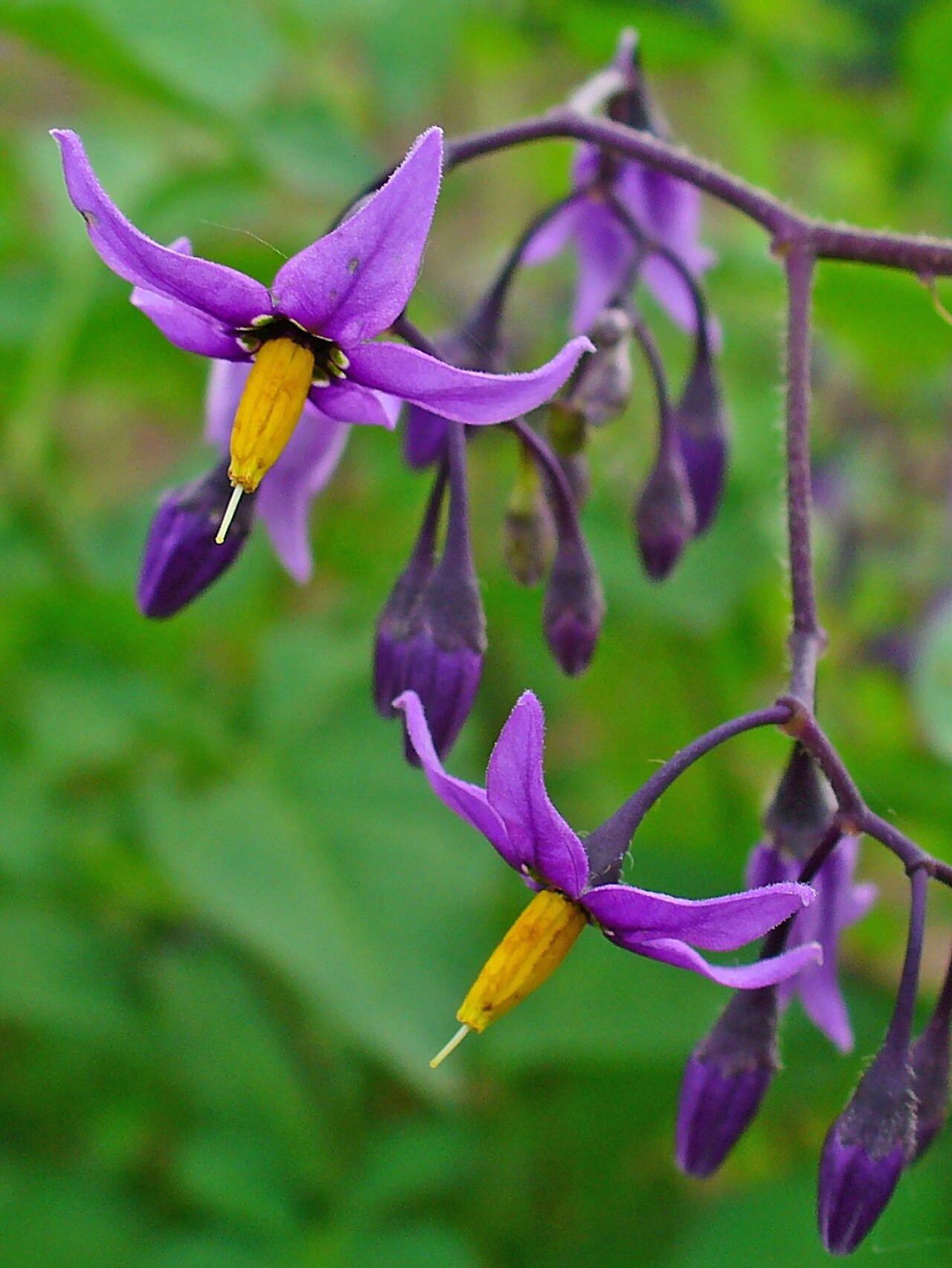
H. Zell · CC BY-SA 3.0
Photo source and identification
Original record · Original image

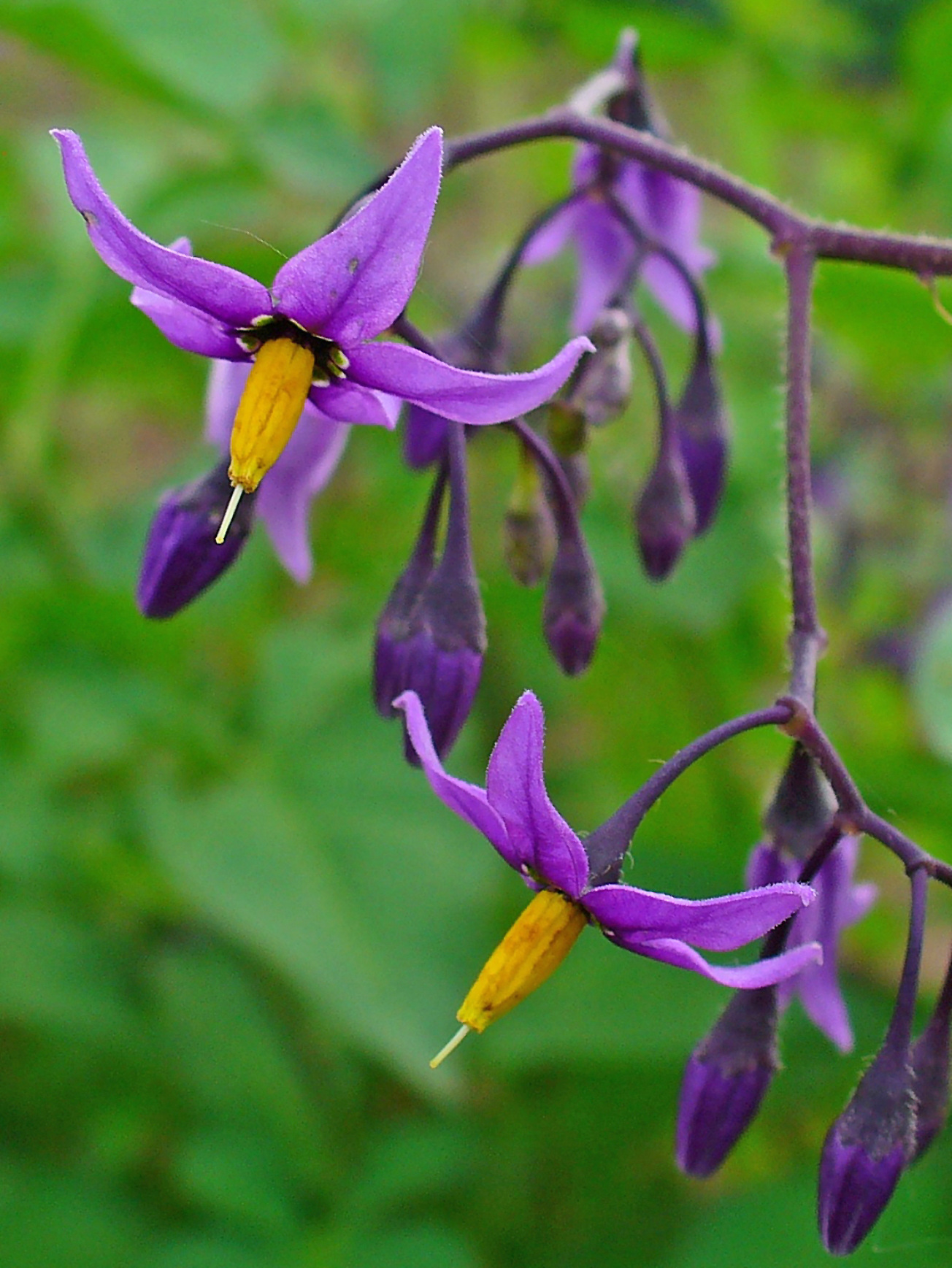
Source page scientific identification plus visual morphology review of the selected photograph. This is a source-identified reference image, not a specimen-based taxonomic determination.
Wikimedia server-resized derivative; no crop, color change, or generative editing. Gallery display preserves the full image; the catalog preview uses a CSS crop.
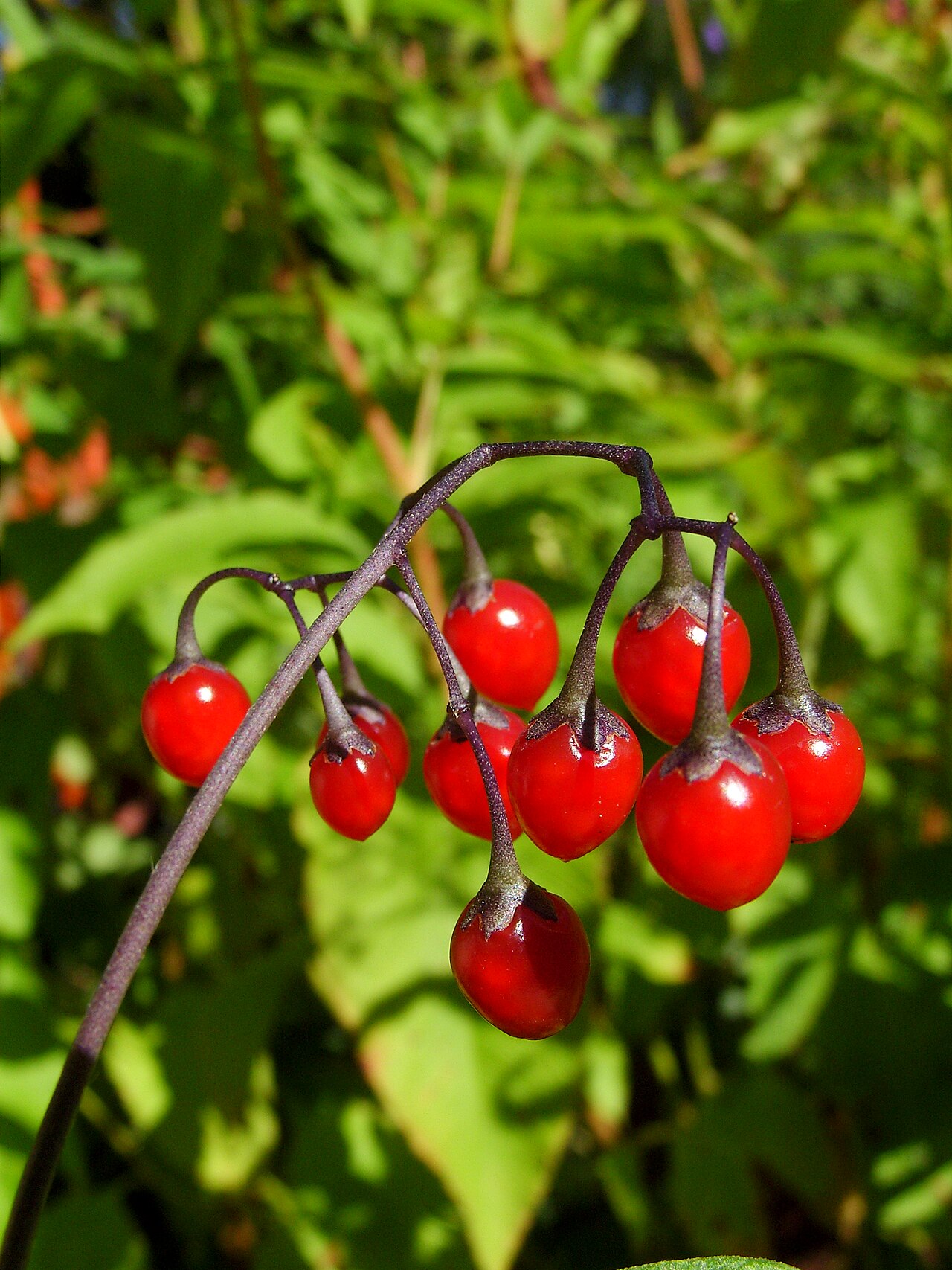
Olli Salmela, ( Dacnoh ) · CC BY-SA 3.0
Photo source and identification
Original record · Original image


Source page scientific identification plus visual morphology review of the selected photograph. This is a source-identified reference image, not a specimen-based taxonomic determination.
Wikimedia server-resized derivative; no crop, color change, or generative editing. Gallery display preserves the full image; the catalog preview uses a CSS crop.
Recognize
A scrambling perennial with purple flowers, a prominent yellow anther cone and berries that ripen red. Some leaves have small basal lobes. N-solanum-dulcamara
Plants & habitat
An introduced, spreading vine of moist disturbed places; it can climb over surrounding vegetation. N-solanum-dulcamara
People
All parts are poisonous, including attractive berries. Ingestion can cause gastrointestinal and neurological illness; contact may irritate skin. N-solanum-dulcamara
Dogs & cats
NC State flags both dogs and cats. Prevent chewing or berry consumption and seek veterinary advice for exposure. N-solanum-dulcamara
Other animals
The source also identifies a livestock concern. Do not treat the plant as forage. N-solanum-dulcamara
Before taking action
Confirm identification and the requirements of your county weed program. For chemical treatment, follow the current product label, including restrictions around animals and water. S27
References
- CO-rules-2025 — Colorado Noxious Weed Act rules, 8 CCR 1206-2, Colorado Secretary of State / Department of Agriculture. Accessed 2026-09-07T01:07:48+00:00. Locator: Parts 3.1, 4.1, 5.1; management provisions; effective May 15, 2025.
- N-solanum-dulcamara — solanum dulcamara — Plant Toolbox, NC State Extension. Accessed 2026-09-07T01:04:56+00:00. Locator: Description; Attributes; Problems; Poisonous to Humans.
- S27 — 2103 – Colorado Noxious Weeds, PlantTalk Colorado · CSU Extension. Accessed 2026-09-07T00:23:57+00:00. Locator: List A, B and C management categories.